
The Return of the Warblers
Every spring, dozens of wood-warbler species pour back into the Northeast to breed. Here's who's coming, when to expect them, and what to grow to bring them into your yard.
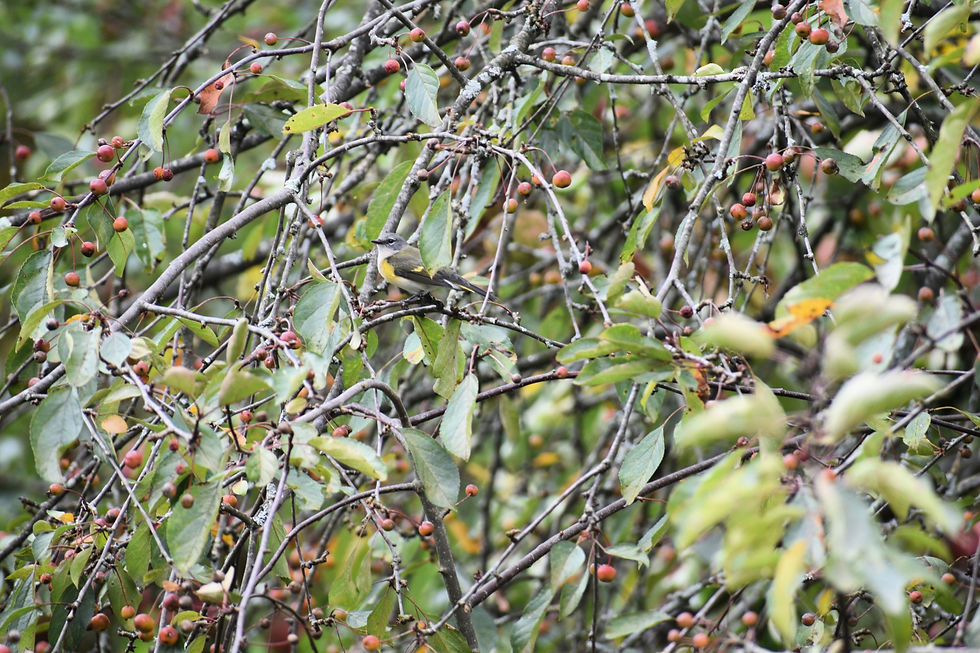
Long before the trees have fully leafed out, the warblers are already moving. By late April, the vanguard species: Yellow-rumped and Pine Warblers; push north along the Atlantic flyway, following the bloom of insects up the continent's spine. Over the next six weeks, wave after wave follows: orange-crowned, black-throated, chestnut-sided, redstarts, ovenbirds, dozens of species threading through forests, thickets, and backyards across New England, New York, and the mid-Atlantic.
For residents of the Northeast, spring warbler migration is one of the great spectacles of the natural year. These are birds of almost improbable beauty, the Blackburnian Warbler blazing orange against dark conifers, the American Redstart flashing its fiery tail like a living coal, and they pass through in numbers that can make even a suburban yard feel briefly electric.
Who Comes Back, and When
Of the roughly 35 warbler species that regularly move through or breed in the Northeast, a dozen or more stay on as nesters. Arrival timing is surprisingly consistent from year to year, governed by day length rather than temperature alone.
Yellow-rumped Warbler
Common Yellowthroat
Yellow Warbler
American Redstart
Chestnut-sided Warbler
Black-throated Blue
Ovenbird
Black-and-white Warbler
Prairie Warbler
Magnolia Warbler
Canada Warbler
Hooded Warbler
Most breeding warblers arrive between late April and late May. The Yellow Warbler, a fixture of shrubby wetland edges, is typically among the first breeders to settle in. The Canada Warbler and other montane species don't reach their nesting grounds in the Berkshires or Adirondacks until May is nearly done.
A suburban yard with the right structure — layered plantings, a water source, some open ground — can host surprising numbers of breeding warblers.
What Warblers Actually Need
Warblers are almost entirely insectivorous. Unlike seed-eating birds, they won't come to a feeder; what draws them is a yard rich in the caterpillars, aphids, beetles, and gnats they hunt from bark and leaf surfaces. The key, then, is not planting for the birds directly, but planting for the insects that feed them.
Entomologist Doug Tallamy's research has shown that native oaks alone can support over 500 species of caterpillars, (the single most important food source for most wood-warblers during breeding season) when they're feeding nestlings. A single caterpillar-bearing oak can make a yard meaningfully more productive for breeding birds than a landscape full of ornamental exotics.
Water matters enormously. A shallow ground-level birdbath, or better yet a small recirculating stream or drip feature, will draw warblers that might otherwise pass straight through. Moving water triggers foraging instincts and is audible from a distance; it works far better than a still basin.

What to Plant
Focus on structural diversity and native species. Warblers forage at different heights, some in the canopy, some in the mid story, some in low shrubs or on the ground. A yard with only lawn and a single shade tree offers almost nothing. Layers matter.
White oak
Quercus alba
The single highest value tree you can plant. Supports more caterpillar species than almost any other northeastern native. Canopy foragers like Black and white and Black throated Green Warblers depend on it.
Native willows
Salix spp.
Fast-growing and extraordinarily productive for insects. Yellow Warblers nest in willows and actively patrol them for caterpillars. Best planted near water.
Spicebush
Lindera benzoin
A native understory shrub that produces early-season insects and berries. Attracts ground-level foragers like Kentucky and Hooded Warblers. Thrives in part shade.
Serviceberry
Amelanchier canadensis
Blooms and fruits early, drawing insects during the peak migration window. Excellent mid-story shrub; fruits attract migrating warblers building fat reserves.
Wild blue indigo
Baptisia australis
Supports specialist bees and numerous moth species, which in turn become warbler food. Tough, long-lived, and beautiful.
Native goldenrods
Solidago spp.
Among the most insect-productive perennials in the Northeast. Goldenrod galls alone shelter hundreds of invertebrate species. Prairie and Yellow Warblers hunt through it readily.
Buttonbush
Cephalanthus occidentalis
A native shrub for wet or poorly drained sites. Blooms in midsummer when warblers are feeding fledglings; heavily used by Common Yellowthroats.
Inkberry holly
Ilex glabra
Dense low growth provides nesting structure for ground nesting species. Berries persist through winter; good for wet woodland edges where many warblers breed.
Practical note:
Resist the urge to deadhead everything in fall. Dried seed heads, leaf litter, and standing stems harbor overwintering insects, exactly the food source early arriving warblers depend on when nights are still cold and caterpillars aren't yet active. A "messy" corner of the yard is often its most productive corner.

Timing Your Attention
The peak of both migration and early breeding activity in the Northeast falls between the first week of May and the third week of June. Dawn is when warblers are most vocal and most visible, males sing persistently to establish territory, making them far easier to locate than at any other time of day. A quiet hour outside before 8 a.m. during this window, in a yard with good native plantings, is as rewarding as many formal birding outings.
By midsummer the singing largely stops, the young are fledged, and warblers become secretive again. But if you've built the right habitat, the layered native plantings, the moving water, the leaf litter left intact; you'll find them still there, quiet and busy, working through the understory.


Comments